Multicloud Goes Mainstream: What the 2026 Cloud Shift Means for Your Business
Cloud computing in 2026 tells two stories at once: the major hyperscalers are competing harder than ever for AI workloads, while simultaneously cooperating on making multicloud operations easier. That combination — competition on AI, cooperation on interoperability — is the defining cloud trend of the year.
The Numbers Behind the Shift
Growth across the major cloud providers has been substantial this year. AWS reported quarterly revenue up nearly 37% year-over-year, while Azure posted 40% cloud revenue growth after integrating advanced AI models more deeply into its enterprise stack. Google Cloud has also posted strong growth of its own. This isn’t incremental growth — it’s a market accelerating on the back of AI infrastructure demand.
Why Competitors Are Suddenly Cooperating
One of the more surprising developments this year is a joint initiative between AWS and Google Cloud aimed at simplifying multicloud operations — with Microsoft Azure reportedly expected to join later. For organizations that have long struggled with fragmented networking, identity, and billing across multiple cloud providers, this is a meaningful shift away from the old assumption that hyperscalers would only ever compete, never cooperate.
The reason is practical: enterprises increasingly run workloads across multiple clouds by necessity — regulatory requirements, cost optimization, avoiding vendor lock-in, or simply because different teams chose different platforms over time. Rather than fighting that reality, providers are starting to build for it.
What’s Actually Driving Adoption
A few forces are shaping how businesses use the cloud this year:
- AI workloads as the default, not the exception. Training custom models, running chatbots, recommendation engines, and predictive analytics increasingly run on provider-managed AI services rather than in-house infrastructure — it’s simply cheaper and faster than building that capability internally.
- Rising infrastructure costs. Industrial GPU costs remain high, and energy prices for data centers have climbed steadily. This is pushing FinOps — the discipline of uniting finance and engineering around cloud cost management — from “nice to have” to foundational practice.
- Identity-first security. As multicloud and SaaS environments expand, security teams are bracing for a wave of identity-based attacks that target the connections between systems rather than any single platform.
- Hybrid, multi-cloud, and federated models. Rather than picking one provider, more organizations are distributing workloads across multiple environments to balance performance, cost, and regulatory requirements — particularly in finance, retail, manufacturing, and healthcare.
What This Means If You’re Choosing (or Re-Evaluating) a Cloud Setup
- Don’t assume single-cloud simplicity beats multicloud flexibility by default. With interoperability initiatives underway, some of the historical pain of multicloud is easing.
- Budget for AI workloads explicitly. If your roadmap includes AI features, factor provider-managed AI service costs into planning now rather than treating them as a later add-on.
- Invest in FinOps practices early, even at a small scale — tracking spend against usage prevents the cost surprises that come with fast-growing cloud services.
- Treat identity as your primary multicloud security boundary — the more platforms you connect, the more identity becomes the thing actually protecting your data.
Bottom line: cloud computing in 2026 isn’t about picking a single “winning” provider anymore. It’s about managing cost, security, and AI workloads intelligently across whichever combination of platforms actually fits how your business operates.
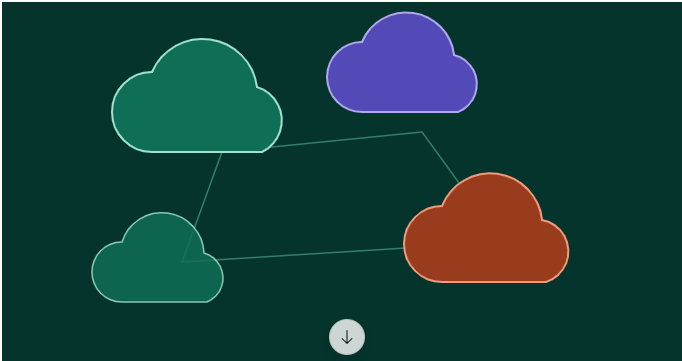
Suggested image alt text: “Illustration of interconnected cloud platforms representing a multicloud enterprise setup”